WELCOME!

Welcome to my new blog, "The Wellness Pantry"

Wednesday, April 1, 2015

8 Natural Allergy Relief Remedies

Ah yes, Springtime!  The birds are singing, flowers are blooming, and people everywhere are sneezing, coughing, and working hard to see through puffy, red eyes!  Enter allergy season!

If you're anything like me, Spring is a time of great beauty and great suffering!  Allergies can make you absolutely miserable.  Still, there are plenty of natural remedies available to you that just might put the "spring" back in your step!

Thanks to Dr. Axe for this fantastic resource on natural allergy relief!  

Disclaimer:  I do not benefit monetarily from any article posted on my blog.  Please know, my sole purpose in posting these articles is for the betterment of those seeking healthy alternatives in a toxic world!  


8 Natural Allergy Relief Remedies


Allergy HeaderIt’s that time of the year again.  Time for congested sinuses, headaches and watering eyes.  Allergy season is upon us and millions of American’s are going to turn to Benadryl, Claritin and other harmful chemicals to get relief.
The good news is there are eight amazing all natural remedies that can give you quick allergy relief.
There are more natural remedies for seasonal allergies than I can mention in this article. No wonder entire books have been written on them!
It was tough to narrow down the options, but after extensive research, I put together theTop 8 natural allergy relief remedies that EVERYONE can and should start today!

1. Neti Pot 

Clearing the nasal passages of allergens and irritants, sinus irrigation originated in the Ayurvedic medical tradition and people in India have been receiving astounding results for centuries.
Thankfully, this “alternative” approach has reached mainstream and the medical community has all but welcomed it with open arms. David Rabago, MD has conducted several studies on the subject and has proven clinically that using a neti pot is effective to prevent and treat several upper respiratory conditions including chronic and acute sinusitis, the common cold and seasonal allergies.
When you use a Neti pot, make sure that the water is distilled and as sterile as possible. Tap water is full of chlorine and fluoride and can actually aggravate your sinuses.
If you don’t want to use a neti pot you can do a salt water sinus rinse by mixing sea salt with warm water and sucking it up one nostril.

2. Apple Cider Vinegar (ACV)

Bragg’s Apple Cider Vinegar is the best and you can now find it almost everywhere! It’s USDA & Kosher certified organic, GMO-free, unfiltered, raw (not pasteurized!), and contains the amazing “Mother” of vinegar.
Drinking a glass of water with a teaspoon of ACV in your water with some fresh lemon juice is the best way to wake up every morning. At the first sign of an allergy attack, put 1 teaspoon of ACV in your Neti Pot solution for a fantastic sinus flush.

3. Quercetin

Naturally found in cruciferous vegetables, onions/shallots, green teas and citrus fruit, quercetin is a bioflavonoid that stabilizes the release of histamine and helps to naturally control allergy symptoms.
A recent study out of Slovakia has shown that quercetin is so effective that it can help calm down allergic asthma by reducing the hyperactivity of airways. It is so powerful that Iranian researchers have proven that quercetin can help control peanut allergies, the leading cause of life-threatening/fatal allergy attacks.
Various sources suggest that it is best to use quercetin as a long-term remedy and people prone to seasonal allergies should start to take them a few weeks before spring arrives and plants start to bloom.

4. Local Raw Honey (Bee Pollen)

Telling you to eat something like raw honey for seasonal allergies may sound too easy because it is so sweet, but don’t discount this ancient remedy. Taking a tablespoon of local, raw honey every day will help your body build a tolerance to the local pollen that is running amuck on your sinuses.
The International Archives of Allergy and Immunology published an article in 2011 that tested how pre-seasonal use of birch pollen honey affected people with birch pollen allergies and discovered that patients taking the honey “reported a 60% lower total symptom score, twice as many asymptomatic days, and 70% fewer days with severe symptoms, and they used 50% less antihistamines compared to the control group” that took conventional meds.
I recommend taking 1 tbsp of raw local honey daily.

5. Stinging Nettle

Stinging nettle has a rich history of medicinal use dating back to medieval Europe where it was used as a diuretic to relieve people of joint pain. According to the University of Maryland Medical Center, studies suggest that it can effectively treat a wide range of health concerns including:
  • Urinary problems like urinary tract infections
  • Benign prostatic hyperplasia
  • Hay fever (allergic rhinitis)
  • Joint pain, sprain and strains
  • Insect bites
Research has specifically shown that nettle leaf naturally controls histamine, which is why a growing number of doctors recommend taking a freeze-dried preparation before hay fever season begins. It can also be used as a tea or tincture.

6. Eucalyptus Oil 

You can use eucalyptus oil for season allergy relief in a variety of ways. You can put several drops into your Neti pot, inhale it via a diffuser or use it in your laundry detergent as an antimicrobial agent.
An interesting study out of Egypt evaluated the effect that various essential oils had in killing the highly allergic house mites and found that eucalyptus oil ranked amongst some of the most potent.
For an eco-friendly, biodegradable addition to your natural detergents add 25 drops of eucalyptus oil to each load of wash during allergy season, especially if you or the kids are running around outside.
Also, if your allergy symptoms are going strong, mix eucalyptus oil with coconut oil and rub it on your chest and behind your ears and diffuse it in the air during the day and while sleeping.

7. Frankincense Essential Oil 

The almost unbelievable cancer-killing capacity of Indian frankincense has been well established in scientific literature for several years, but its life-giving power doesn’t end there.
In a study published by Phytotherapy Research, for instance, when mice took 1-10 mg of frankincense orally it was discovered that multiple levels of their immune systems were stimulated including IgG, IgM, and interferon.
In layman’s terms, frankincense can boost the immune system like no other and if you suffer from seasonal allergies, make sure you implement it into your natural health regimen.
I simply rub frankincense behind my ears and on my chest or diffuse frankincense essential oil in my home and office three hours daily. 

8. SBO Probiotics

It is becoming common knowledge that the immune system starts in the gut. In fact, more than 80% of your immune function is stored in your gastrointestinal (GI) tract! It should be no wonder that research keeps surfacing that links probiotic use to reduced risk of allergies.
They are so effective that a study published last year in the journal Pediatrics discovered that women who regularly take probiotics during pregnancy significantly reduce their child’s risk of developing allergies!
I highly recommend getting your soil-based organisms through probiotics in a supplement form or from food at farmer’s markets and your local garden.
Keep these side effects and natural remedies in mind as we approach what many are claiming will be one of the worst allergy seasons we’ve had in a long while!

Tuesday, March 31, 2015

The Real Reason Wheat is Toxic (it’s not the gluten)

The following article from the "The Healthy Home Economist" is probably one of the most revealing articles I've read in a long while regarding food production in America.  It's hard to believe farmers would be willing to engage in such practices, but given the economic challenges modern farmers face, it's no wonder.  Prepare to be shocked by what you read!

Special thanks to Sarah at "The Healthy Home Economist" for providing this vital information!

The Real Reason Wheat is Toxic (it’s not the gluten)


The stories became far too frequent to ignore.

Emails from folks with allergic or digestive issues to wheat in the United States experienced no symptoms whatsoever when they tried eating pasta on vacation in Italy.
Confused parents wondering why wheat consumption sometimes triggered autoimmune reactions in their children but not at other times.

In my own home, I’ve long pondered why my husband can eat the wheat I prepare at home, but he experiences negative digestive effects eating even a single roll in a restaurant.

There is clearly something going on with wheat that is not well known by the general public. It goes far and beyond organic versus nonorganic, gluten or hybridization because even conventional wheat triggers no symptoms for some who eat wheat in other parts of the world.

What indeed is going on with wheat?

For quite some time, I secretly harbored the notion that wheat in the United States must, in fact, be genetically modified.  GMO wheat secretly invading the North American food supply seemed the only thing that made sense and could account for the varied experiences I was hearing about.

I reasoned that it couldn’t be the gluten or wheat hybridization. Gluten and wheat hybrids have been consumed for thousands of years. It just didn’t make sense that this could be the reason for so many people suddenly having problems with wheat and gluten in general in the past 5-10 years.

Finally, the answer came over dinner a couple of months ago with a friend who was well versed in the wheat production process. I started researching the issue for myself, and was, quite frankly, horrified at what I discovered.

The good news is that the reason wheat has become so toxic in the United States is not because it is secretly GMO as I had feared (thank goodness!).

The bad news is that the problem lies with the manner in which wheat is grown and harvested by conventional wheat farmers.

You’re going to want to sit down for this one.  I’ve had some folks burst into tears in horror when I passed along this information before.

Common wheat harvest protocol in the United States is to drench the wheat fields with Roundup several days before the combine harvesters work through the fields as the practice allows for an earlier, easier and bigger harvest 
Pre-harvest application of the herbicide Roundup or other herbicides containing the deadly active ingredient glyphosate to wheat and barley as a desiccant was suggested as early as 1980.  It has since become routine over the past 15 years and is used as a drying agent 7-10 days before harvest within the conventional farming community.

USDA pesticides applied to wheat

According to Dr. Stephanie Seneff of MIT who has studied the issue in depth and who I recently saw present on the subject at a nutritional Conference in Indianapolis, desiccating non-organic wheat crops with glyphosate just before harvest came into vogue late in the 1990’s with the result that most of the non-organic wheat in the United States is now contaminated with it.  Seneff explains that when you expose wheat to a toxic chemical like glyphosate, it actually releases more seeds resulting in a slightly greater yield:   “It ‘goes to seed’ as it dies. At its last gasp, it releases the seed” says Dr. Seneff.

According to the US Department of Agriculture, as of 2012, 99% of durum wheat, 97% of spring wheat, and 61% of winter wheat has been treated with herbicides. This is an increase from 88% for durum wheat, 91% for spring wheat and 47% for winter wheat since 1998.

Here’s what wheat farmer Keith Lewis has to say about the practice:

I have been a wheat farmer for 50 yrs and one wheat production practice that is very common is applying the herbicide Roundup (glyposate) just prior to harvest. Roundup is licensed for preharvest weed control. Monsanto, the manufacturer of Roundup claims that application to plants at over 30% kernel moisture result in roundup uptake by the plant into the kernels. Farmers like this practice because Roundup kills the wheat plant allowing an earlier harvest.

A wheat field often ripens unevenly, thus applying Roundup preharvest evens up the greener parts of the field with the more mature. The result is on the less mature areas Roundup is translocated into the kernels and eventually harvested as such.

This practice is not licensed. Farmers mistakenly call it “dessication.” Consumers eating products made from wheat flour are undoubtedly consuming minute amounts of Roundup. An interesting aside, malt barley which is made into beer is not acceptable in the marketplace if it has been sprayed with preharvest Roundup. Lentils and peas are not accepted in the market place if it was sprayed with preharvest roundup….. but wheat is ok.. This farming practice greatly concerns me and it should further concern consumers of wheat products.

Here’s what wheat farmer Seth Woodland of Woodland and Wheat in Idaho had to say about the practice of using herbicides for wheat dry down:

That practice is bad. I have fellow farmers around me that do it and it is sad. Lucky for you not all of us farm that way. Being the farmer and also the president of a business, we are proud to say that we do not use round up on our wheat ever!

This practice is not just widespread in the United States either. The Food Standards Agency in the United Kingdom reports that use of Roundup as a wheat desiccant results in glyphosate residues regularly showing up in bread samples. Other European countries are waking up to to the danger, however. In the Netherlands, use of Roundup is completely banned with France likely soon to follow.

Using Roundup on wheat crops throughout the entire growing season and even as a desiccant just prior to harvest may save the farmer money and increase profits, but it is devastating to the health of the consumer who ultimately consumes the glyphosate residue laden wheat kernels.

The chart below of skyrocketing applications of glyphosate to US wheat crops since 1990 and the incidence of celiac disease is from a December 2013 study published in the Journal Interdisciplinary Toxicology examining glyphosate pathways to autoimmune disease. Remember that wheat is not currently GMO or “Roundup Ready” meaning it is not resistant to its withering effects like GMO corn or GMO soy, so application of glyphosate to wheat would actually kill it.

celiac incidence as a factor of glyphosate application to wheat

While the herbicide industry maintains that glyphosate is minimally toxic to humans, research published in the Journal Entropy strongly argues otherwise by shedding light on exactly how glyphosate disrupts mammalian physiology.
Authored by Anthony Samsel and Stephanie Seneff of MIT, the paper investigates glyphosate’s inhibition of cytochrome P450 (CYP) enzymes, an overlooked component of lethal toxicity to mammals.

The currently accepted view is that ghyphosate is not harmful to humans or any mammals.  This flawed view is so pervasive in the conventional farming community that Roundup salesmen have been known to foolishly drink it during presentations!
However, just because Roundup doesn’t kill you immediately doesn’t make it nontoxic.  In fact, the active ingredient in Roundup lethally disrupts the all-important shikimate pathway found in beneficial gut microbes which is responsible for synthesis of critical amino acids.

Friendly gut bacteria, also called probiotics, play a critical role in human health. Gut bacteria aid digestion, prevent permeability of the gastointestinal tract (which discourages the development of autoimmune disease), synthesize vitamins and provide the foundation for robust immunity.  In essence:

Roundup significantly disrupts the functioning of beneficial bacteria in the gut and contributes to permeability of the intestinal wall and consequent expression of autoimmune disease symptoms

In synergy with disruption of the biosynthesis of important amino acids via the shikimate pathway, glyphosate inhibits the cytochrome P450 (CYP) enzymes produced by the gut microbiome.  CYP enzymes are critical to human biology because they detoxify the multitude of foreign chemical compounds, xenobiotics, that we are exposed to in our modern environment today.

As a result, humans exposed to glyphosate through use of Roundup in their community or through ingestion of its residues on industrialized food products become even more vulnerable to the damaging effects of other chemicals and environmental toxins they encounter!

What’s worse is that the negative impact of glyphosate exposure is slow and insidious over months and years as inflammation gradually gains a foothold in the cellular systems of the body.

The consequences of this systemic inflammation are most of the diseases and conditions associated with the Western lifestyle:

·         Gastrointestinal disorders
·         Obesity
·         Diabetes
·         Heart Disease
·         Depression
·         Autism
·         Infertility
·         Cancer
·         Multiple Sclerosis
·         Alzheimer’s disease
·         And the list goes on and on and on …

In a nutshell, Dr. Seneff’s study of Roundup’s ghastly glyphosate which the wheat crop in the United States is doused with uncovers the manner in which this lethal toxin harms the human body by decimating beneficial gut microbes with the tragic end result of disease, degeneration, and widespread suffering
Got the picture yet?

Even if you think you have no trouble digesting wheat, it is still very wise to avoid conventional wheat as much as possible in your diet!

You Must Avoid Toxic Wheat No Matter What

The bottom line is that avoidance of conventional wheat in the United States is absolutely imperative even if you don’t currently have a gluten allergy or wheat sensitivity. The increase in the amount of glyphosate applied to wheat closely correlates with the rise of celiac disease and gluten intolerance. Dr. Seneff points out that the increases in these diseases are not just genetic in nature, but also have an environmental cause as not all patient symptoms are alleviated by eliminating gluten from the diet.

The effects of deadly glyphosate on your biology are so insidious that lack of symptoms today means literally nothing.

If you don’t have problems with wheat now, you will in the future if you keep eating conventionally produced, toxic wheat!
How to Eat Wheat Safely
Obviously, if you’ve already developed a sensitivity or allergy to wheat, you must avoid it.  Period.

But, if you aren’t celiac or gluten sensitive and would like to consume this ancestral food safely, you can do what we do in our home. We only source organic, preferably low gluten, unhybridized Einkorn wheat for breadmaking, pancakes, cookies etc.  But, when we eat out or are purchasing food from the store, conventional wheat products are rejected without exception.  This despite the fact that we have no gluten allergies whatsoever in our home – yet.

I am firmly convinced that if we did nothing, our entire family at some point would develop sensitivity to wheat or autoimmune disease in some form due to the toxic manner in which it is processed and the glyphosate residues that are contained in conventional wheat products.

What Are You Going to Do About Toxic Wheat?

How did you react to the news that US wheat farmers are using Roundup, not just to kill weeds, but to dry out the wheat plants to allow for an earlier, easier and bigger harvest and that such a practice causes absorption of toxic glyphosate, the active ingredient in Roundup and other herbicides, right into the wheat kernels themselves?

Did you feel outraged and violated like I did? How will you implement a conventional wheat-avoidance strategy going forward even if you haven’t yet developed a problem with gluten or wheat sensitivity?

What about other crops where Roundup is used as a pre-harvest dessicant such as barley, sugar cane, rice, seeds, dried beans and peas, sugar cane, sweet potatoes, and sugar beets?  Will you only be buying these crops in organic form from now on to avoid this modern, man-made scourge?

Sarah, The Healthy Home Economist


Monday, March 30, 2015

Lose The Wheat...Lose The Weight!


Probably one of the most informative, helpful interviews I've heard!  If you are struggling with weight or health issues of any kind, check out this amazing episode from Shawn Stevenson and the Model Health Show!  Click HERE to listen.
Check out more incredible episodes by visiting Shawn at theshawnstevensonmodel.com/ 


How can something so soft, so comforting, and so unsuspecting be the cause of many of the health problems running rampant in our society today? And if our ancestors ate bread, and built civilizations on it without consequence, then how can it be bad for us now?
All of these questions and more are about to be answered in this interview with the author of the #1 New York Times Bestselling book Wheat Belly, Dr. William Davis.
Wheat, though a staple in our modern life, has grown in use and variation without assumption. Wheat has gone “Hollywood” and expanded out from the bread game into thousands of cereals, every baked good imaginable (I was a fan of Wheat’s appearance in the Hostess Ding Dong myself), and countless other items have featured wheat in a supporting roll (like medications, beauty products, and even supplements, just to name a few). Truly, wheat is everywhere.
So, when did wheat begin showing signs that its ego got too big and it was now causing massive harm? Well, the research dates as far back as 10,000 years when the birthing of agriculture took hold. Humans began staying in one place, monocropping (mainly wheat), and genetic manipulation of wheat first peeks out its lightly toasted face.
With this shift to monocropping and agriculture came startling evidence in human remains. More degenerative bone diseases, a smaller physical stature, as well as evidence of other chronic illnesses like cancer were on the rise.
Now, things were still not nearly as volatile as today because whole foods were still the basis of the diet. Unlike the heavily processed frankenfoods of today. You wouldn’t have seen a Cinnabon, a box of Frosted Mini-Wheats, or a double-stuffed crust deep dish pizza anywhere in sight. Wheat has gone from a bit of a problem, to a flat out flagrant food pyramid bully.
You’re going to be shocked when you find out just how wheat is contributing to weight gain, hormone problems, and even autoimmune diseases. Today you’re going to learn important information that will likely change your life forever.
Time to find out how to rise above the Wheat Belly, supercharge your energy, and live a longer, healthier life.

In this episode you’ll discover:

  • What the #1 antioxidant food is (by a long shot!)
  • How healthcare has turned diseases into profit and procedure opportunities.
  • What originally compelled Dr. William Davis to pull wheat out of his patient’s diets.
  • How a non-celiac patient completed cured her ulcerative colitis by following Dr. Davis’ advice.
  • What type of relationship you should have with your doctor (this is critical!)
  • How high blood sugar can lead to a myriad of diseases.
  • How a protein found in wheat called gliadin can lead to autoimmune diseases.
  • What compounds found in wheat amplify your appetite and cause you to overeat.
  • How wheat germ agglutinin can block the function of your satiety hormone leptin.
  • Where the term obesogens come from (the perfect foods to make you fat).
  • Why wheat can make you store fat faster than pure table sugar (this is shocking!)
  • Why learned helplessness can prevent you from losing weight no matter what you do.
  • How modern day wheat has been mutated (this is NOT what your ancestors ate!)
  • How wheat helps create extremely inflammatory visceral fat.
  • Why wheat and related grains can lead to estrogen-related health problems (from fibroid tumors to man-boobs).
  • Why kicking the wheat habit can lead to drug-like withdrawal symptoms.
  • How you can quickly reverse health issues by following a few simple Wheat Belly tips.
  • How gluten-free foods can make you just as fat and unhealthy as their gluten containing big brothers.
  • Why 90 percent of the population is experiencing gut damage from wheat and don’t even know it.

Saturday, March 28, 2015

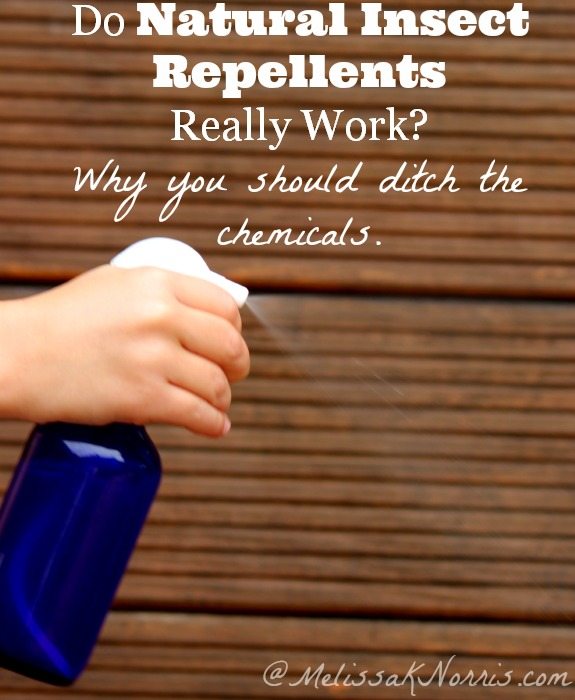
All Natural Insect Repellent That Really Works!

Do natural insect repellents work? I used to wonder that same thing. Summers in the South are wonderful, but bugs can really make the great outdoors seem...not so great!  If you're sick and tired of being "today's dinner special" every time you step out the door, read on to learn how essential oils may be the safe, toxin free answer to your summertime insect woes!

Thanks to Melissa Norris for this helpful article!  Be sure to check out Melissa's awesome website!
Do natural insect repellents work? I had no idea what was in the commercial stuff. This is the only spray we'll use from here on out. And it only costs $1.28 to make!
With our critters, garden, and homestead, we spend a lot of time outdoors. Especially come summer time. We’re camping fools. Last weekend we caught about 15 trout. You know you love the great outdoors if you go camping in the rain. Ever seen those campsites with the blue tarps strung from one end to the other? Yep, that would be us.
Despite my love of the outdoors I can’t stand mosquitoes. They carry nasty diseases and they itch like the dickens when they bite. And the buzzing. If you’ve ever had a mosquito in your tent you know exactly what I’m talking about.
When I was younger I used whatever bug spray we could find. Most of these contained Deet. One time I got some on my lip. It went numb. Yep. Totally numb until hours later when the spray wore off.
My brother works in the woods and used some Deet insect spray from a fellow worker. It melted the plastic coating from his glasses. Yes, melted!
Um, I don’t know about you, but I don’t care who says it’s safe, if it makes my skin go numb and melts plastic, it ain’t safe enough for me. You can go here (scroll down to the middle of the page to health effects) to read about Deet and seizures, central nervous system, and insomnia.
Wonder if natural bug repellents work? Check out this easy and frugal natural insect repellent spray. No pesticides in our house anymore.
We’d been using a natural bug spray from Badger which worked pretty well, but I had a hard time finding it locally and it was over $10 for 4 ounces. Kinda spendy.
This natural bug spray is simple to make, no nasty chemicals, pesticides, or ingredients, takes literally less than a minute to make, and get this, only costs $1.28 to make. You know this frugal mamma loves those kind of prices.
Homemade natural insect repellent spray that works. I can't believe how cheap this is to make.  Best part, no nasty chemicals or pesticides on me or my kids!
Natural Insect Repellent Spray Recipe
4 ounces distilled water
5 drop essential Peppermint Oil
15 drops essential Purification Oil blend
Pour water into a glass bottle. (Note: I wouldn’t use plastic or metal with essential oils. They’re powerful and glass is best). Place drops of essential oils into water, put on lid, and shake. Spray on to skin and clothing as an insect repellent. Repeat as needed.
I have to tell you how awesome it was to just close my eyes and spray this spray right on my face. No worries when my kids grabbed the bottle to spray themselves. We passed it around the campfire and shared with other campers. It was truly a relief to have something that worked and I wasn’t worried about the health consequences for me or my family.
I did have to reapply to my forehead after the first hour, but an extra spray was totally worth it for me. We watched the mosquitoes fly towards us, get close, and then turn in the other direction.
Update: The Purification blend is a blend of citronella, lemon grass (low enough it doesn’t seem to attract bees, or hasn’t when we’ve used it), melaleuca (tea tree), lavender, and myrtle oil. If making your own blend, be sure to keep the lemon grass low so it doesn’t attract bees.